innerchampion.in

Uncategorized

Uncategorized

PSYCHOLOGIST IN AMRITSAR: A COMPLETE GUIDE TO MENTAL HEALTH AND PSYCHOLOGICAL COUNSELLING

Mental health is an essential part of living a healthy, happy and balanced life . in today’s busy world people may have experience stress, anxiety, academic pressure, relationship challenges and work stres Sometimes, managing these problems alone can become overwhelming. Seeking professional guidance can help individuals understand their emotions and develop healthier coping strategies. Finding a qualified psychologist in Amritsar can be an important step towards improving emotional well-being. Psychological counselling provides a supportive environment where people can discuss their concerns, understand their thoughts, and work towards positive changes in their lives. Whether you are looking for stress management, emotional support, or personal development, understanding psychological counselling can help you make informed decisions about your mental health. What Is Psychological Counselling? Psychological counselling is a professional process in which a trained mental health professional helps individuals understand and manage emotional, behavioural, and personal challenges. Counselling sessions provide an opportunity to discuss concerns in a supportive and confidential environment. A psychologist may use evidence-based approaches to help clients recognise unhelpful thought patterns, improve communication, and develop practical coping skills. People may consider counselling for various reasons, including: You do not have to wait until a problem becomes severe to seek professional support. Counselling can also be useful for personal growth and emotional understanding. Benefits of Visiting a Psychologist in Amritsar Choosing a qualified psychologist in Amritsar can give individuals access to professional support that considers their personal circumstances, concerns, and goals. 1. Better Emotional Well-Being Understanding emotions is an important part of mental health. Some people find it difficult to express sadness, frustration, fear, or disappointment. Psychological counselling can help individuals recognise these emotions and understand what may be contributing to them. With appropriate professional guidance, people can learn to respond to difficult situations more constructively and develop healthier emotional habits. 2. Stress and Anxiety Management Stress can arise from examinations, work responsibilities, family expectations, financial concerns, or uncertainty about the future. When stress becomes difficult to manage, it may affect sleep, concentration, and everyday activities. A psychologist may teach practical techniques such as relaxation exercises, identifying unhelpful thoughts, problem-solving, and setting realistic goals. These methods can help people manage stressful situations more effectively. 3. Improved Self-Confidence Low self-confidence can affect decision-making, communication, and relationships. Counselling can help individuals explore negative beliefs about themselves, recognise their strengths, and develop a more balanced perspective. Over time, this process may support better self-awareness and confidence in handling everyday challenges. 4. Healthier Relationships Healthy relationships depend on communication, trust, respect, and understanding. Misunderstandings and unresolved conflicts can sometimes create difficulties between partners, friends, or family members. Psychological counselling may help individuals improve communication, understand different perspectives, and develop constructive ways to resolve disagreements. Types of Mental Health Counselling Services Different individuals require different forms of support. The appropriate service depends on the person’s concerns, preferences, and professional assessment. Individual Counselling Individual counselling involves one-to-one sessions between a client and a qualified mental health professional. It may help people work through personal challenges, emotional concerns, stress, or difficulties adjusting to life changes. Stress Management Counselling Stress management counselling focuses on understanding sources of stress and developing healthier ways to respond. Strategies may include relaxation techniques, practical problem-solving, and changes to daily routines. Relationship Counselling Relationship counselling can help people understand communication difficulties, explore recurring conflicts, and work towards healthier interactions. The specific approach depends on the concerns being addressed and the type of service offered. Online Psychologist Consultation Online counselling may provide a convenient option for people who cannot easily attend in-person sessions. Depending on the provider, consultations may take place through secure video calls or other suitable online platforms. Before choosing online services, check the psychologist’s qualifications, privacy practices, and suitability for your needs. How to Choose the Best Psychologist in Amritsar Finding the right professional is an important part of seeking mental health support. Instead of choosing a provider based only on advertisements or online rankings, consider the following factors. 1. Check Qualifications and Credentials Look for relevant professional qualifications, appropriate registration where applicable, and experience in addressing concerns similar to yours. Verify credentials through reliable official sources. 2. Understand the Services Offered Different professionals may specialise in different areas. Check whether the psychologist offers individual counselling, stress management, relationship support, or online consultations that match your requirements. 3. Consider Communication and Comfort You should feel able to discuss your concerns respectfully and without unnecessary judgement. It is reasonable to ask questions about the counselling process and discuss your expectations before beginning. 4. Ask About Fees and Appointment Availability Before booking, confirm the consultation fee, session duration, appointment schedule, cancellation policy, and whether online or in-person sessions are available. Choosing an affordable psychologist in Amritsar should also involve checking professional qualifications and service quality rather than price alone. When Should You Visit a Psychologist? Consider speaking with a mental health professional if emotional difficulties persist, become overwhelming, or interfere with your studies, work, sleep, relationships, or daily routine. Some possible reasons to seek support include: These experiences do not automatically indicate a particular mental health condition. A qualified professional can help assess your concerns and discuss suitable next steps. If you are experiencing an immediate mental health crisis or feel unable to keep yourself safe, seek urgent help from local emergency services or a qualified crisis-support service. Book an Appointment with a Psychologist in Amritsar Taking the first step towards seeking support can feel difficult, but asking for help is a positive and practical decision. Start by identifying your main concerns, researching qualified professionals, and asking questions about their services. If you are considering booking an appointment with a psychologist in Amritsar, look for a provider whose qualifications, approach, fees, and availability meet your needs. You can also ask whether an initial consultation is available to discuss your concerns and understand the counselling process. Remember that every person’s experience is different. Counselling is a collaborative process, and progress may take time. The goal is to develop healthier ways of understanding yourself, managing […]
Uncategorized

BEST CAFES IN AMRITSAR

Amritsar is a famous place in punjab , know for few special things like golden temple, delicious punjabi food and rich culture but there is also a another side of Amritsar which deserves attention and it is none other then beautiful and aesthetic cafes .from specialty of coffee to cheese breads and freshly baked desserts and modern brunch menus, the best cafes in amritsar offer something for every kind of cafe lovers. whether you are looking for a peaceful place to enjoy coffee, a fun place for hangout and a stylish cafe for a peaceful date . Amritsar has plenty of options to explore. lets start talking about famous cafes of amritsar. 1. CAFE OZ The cafe oz located in ranjit avenue area of amritsar, cafe oz has been known as casual cafe, restaurant and lounge offering a mix of indian and international flavours. Its relaxed setting and broad menu made it a popular choice for friends, couples and travellers looking for something different from Amritsar’s traditional Punjabi dining scene. Ambience and atmosphere One of the highlights of Cafe Oz is its modern and comfortable ambience. The café has been associated with spacious seating, a lounge-style environment and an outdoor rooftop setting. Comfortable sofas, contemporary décor and an informal atmosphere make it suitable for casual meals, evening get-togethers and relaxed conversations. What Makes Cafe Oz Different? What helped Cafe Oz stand apart was its combination of café culture, restaurant-style meals and lounge ambience. Instead of being only a coffee shop, it offered breakfast, lunch and dinner choices together with beverages and international dishes. For travellers exploring Amritsar who wanted a break from traditional dhabas and Punjabi food, Cafe Oz offered a more contemporary dining experience in one of the city’s popular commercial neighbourhoods. Location District Shopping Complex, Ranjit Avenue, Amritsar, Punjab 143001

Uncategorized

How social media affects athletes’ mental health ?

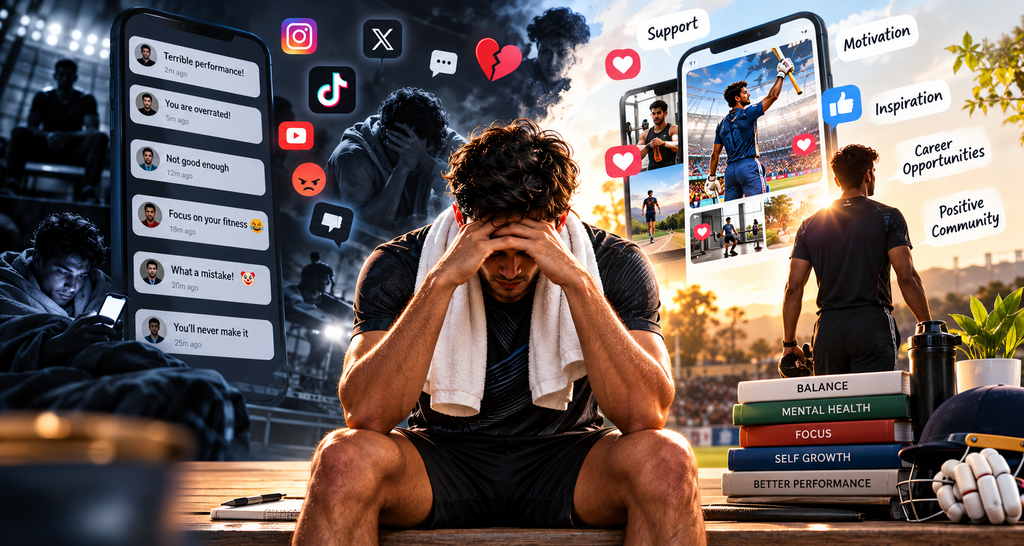
INTRODUCTION Social media is a great source for getting knowledge and learning about new things and in today generation social media effects differently on today’s generation . now lets talk about how social media effects on athletes mental health . social media has changed the way athletes train, talk, communicate, compete and connect with fans. instagram, you tube, tiktok and other platforms allow athletes to share there achievements, build personal brand, and connect with supporters . but, there is also a another side of digital world. For athletes, social media also bring pressure, criticism, comparision, body-image concerns, online abuse and constant pressure to stay visible. when an athletes performance discussed publicly, a thousand of comments, reactions, hates and people opinions. this is the main reason why that question raised that . How does social media affects athletes mental health ? The answer is not simply “social media is bad.” Research suggests that its effects are more complicated. A 2026 systematic review of athlete-focused studies found frequent associations between social media use and anxiety, depressive symptoms, emotional distress, body-image concerns, and burnout. However, the researchers also emphasized that findings vary according to how social media is used, the athlete population, and the context. For athlete, the goal should be use social media healthy and internationally rather, then just avoiding it completely. 1. SOCIAL MEDIA CREATES PERFORMANCE PRESSURE Athletes already face pressure to perform. social media is just a another layer on it . like, after a match player see his social media immediately and can check comments about :- A footballer who misses a penalty may continue thinking about the mistake after the match because the incident is being discussed online. This can make it harder to mentally switch off from competition. The 2026 IOC consensus statement identifies social media as an environmental factor relevant to elite athlete mental health and notes associations with poorer mental health, anxiety, sleep quality, and body-image concerns in athlete populations. Sports Psychology Lesson is :- Athletes need to separate performance feedback from personal identity. One poor performance is an event—not a definition of who they are. 2. SOCIAL COMPARISION CAN AFFECT ATHLETES CONFIDINCE Social media constantly shows people at their best Athletes may see: Comparing your everyday reality with someone else carefully selected highlights can create unrealistic expectations . an athletes may start thinking that Maybe i’m not enough ? or why am i not performing like them ? This can gradually affect athlete confidence and self-esteem. Sports psychology encourages athletes to focus more on personal progress than constant comparison. Instead of asking: “Am I better than them?” ask: “Am I improving compared with yesterday?” 3. BODY IMAGE AND APPEARANCE PRESSURE Athletes often depend on their bodies for performance, but social media can change the way they view their appearance. Images of highly muscular, lean, or “perfect” bodies can create unrealistic expectations. An athlete may start focusing more on appearance than performance. This can be particularly difficult when comments about body shape, weight, or appearance become frequent. Important Reminder A strong athletic body does not have to look a particular way. Different sports require different physical characteristics, and individual athletes naturally have different body types. 4. ONLINE CRITICISM AND CYBER BULLYING One of the biggest challenges for professional and elite athletes is online abuse. Athletes can receive negative comments from strangers immediately after a competition. This may include: The IOC consensus reports that athletes have been targeted by cyberbullying and other online abuse, with some research documenting substantial abusive content directed toward elite athletes. Constant exposure to this negativity can increase emotional stress and make athletes feel that they are being judged all the time. Sports Psychology Approach Athletes can benefit from: Boundaries → Blocking → Reporting → Support Not every comment deserves an emotional response. 5. SOCIAL MEDIA CAN AFFECT SLEEP AND RECOVERY Recovery is a major part of athletic performance. An athletes needs physical recovery, but mental recovery is also important . Constant checking of notifications, comments, messages, and sports updates can make it difficult to disconnect. Research in athletes has found associations between social media use and reduced sleep quality, while broader research also links problematic social media use with sleep problems and poorer wellbeing. Poor sleep can then make it harder to: For this reason, athletes should consider creating screen-free periods, especially around bedtime. THERE ARE ALSO A POSITIVE SIDE OF SOCIAL MEDIA LIKE :- 6. Social Media Can Also Help Athletes It is important not to look only at the negative side. Social media can provide real benefits. Athletes can use it to: The IOC notes that social media can provide connection, emotional support, communication, and sponsorship opportunities. It can also help some athletes challenge negative stereotypes and reduce feelings of isolation. So the question isn’t: “Should athletes use social media?” A better question is: “How can athletes use social media in a healthy way?” Social Media and Sports Psychology: Finding the Balance The relationship between social media and athletes is not completely negative or positive. It depends on: What you consume + How often you use it + How you respond to it. An athlete who uses social media to connect with supporters and build a career may have a very different experience from an athlete who spends hours comparing themselves with others or reading negative comments. Current research also cautions against assuming that social media itself directly causes every mental-health problem. Much of the athlete-specific evidence is observational or cross-sectional, meaning researchers can identify associations but cannot always establish cause and effect. That distinction matters. Final Thoughts Social media is now part of the modern sporting environment. It can give athletes a voice, create opportunities, build communities, and help them connect with fans. But it can also create social media pressure, comparison, online criticism, body-image concerns, sleep problems, and emotional stress. The answer isn’t necessarily to disappear from social media. The goal is to use it intentionally. Athletes should remember that their worth is bigger than their […]

Uncategorized

POKER PSYCHOLOGY LESSONS FOR BETTER GAME

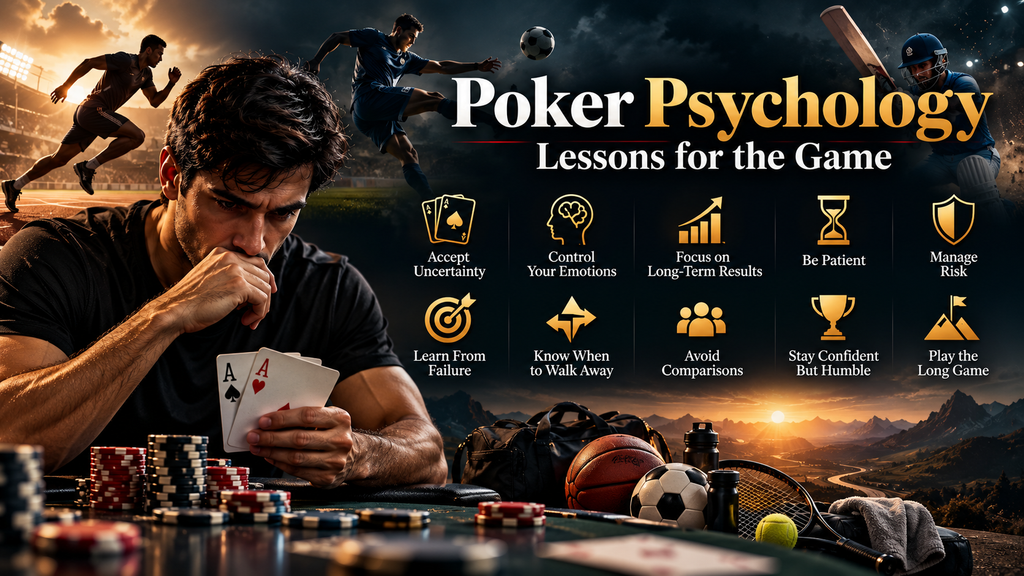
INTRODUCTION Life is a lot like a poker game you are not always given the card you want . sometimes you get an amazing opportunity, while other times you have to work with limited information and limited circumstances . you cannot control every card you receive. but you can control how you respond to it that is what makes poker psychology so intresting Poker is not only about cards or knowing rules. it also include decision making, emotional control, patience, confidence, risk management and resilience. The goal is not to treat sports or life like gambling. Instead, poker can provide useful psychological lessons that athletes can apply to competition and everyday challenges. 1. You Cannot Control Every Card One of the biggest lessons from poker is accepting uncertainty. You can make a good decision and still get an unexpected result. The same thing happens in sports. A cricket team can prepare perfectly and still lose because of changing conditions. A footballer can practice penalties for weeks and still miss an important shot. The important question is not: “Why did this happen?” Instead, ask: “What can I do now?” Sports psychology Lesson is :- Athletes should focus on controllable factors such as effort, preparation, concentration, and attitude rather than worrying about things they cannot control. 2. Good Decisions Can Still Produce Bad Results Poker teaches an important distinction between decision quality and outcome. You can make a sensible decision and still lose because the result is uncertain. The same applies to athletes. A basketball player may take a technically good shot that simply does not go in. That does not automatically mean the decision was wrong. Instead of judging yourself only by the result, ask: Sports Psychology Lesson is:- Learning to evaluate the process, rather than only the result, can help athletes develop resilience and reduce unnecessary self-criticism. 3. Control Your Emotions A famous concept in poker is tilt. Tilt happens when emotions such as anger, frustration, or excitement start influencing decisions. Athletes can experience the same thing. Imagine a tennis player losing two easy points. Frustration builds, concentration drops, and the player starts rushing shots. The original mistake has now affected the next few points. Poker Technique: Tilt Control Pause → Breathe → Reset → Focus on the next action. Sports Psychology Lesson is :- Emotional control does not mean ignoring emotions. It means recognizing them without allowing them to control your behaviour. 6. Use Position and Information Position is an important concept in poker because the order in which players act can influence the information available to them. The broader lesson is: Observe before you act. A tennis player may observe an opponent’s movement before choosing where to place a shot. A cricket bowler may study a batsman’s weaknesses before deciding how to bowl. A footballer may observe an opponent’s positioning before making a pass. Sports Psychology Lesson is :- Better observation can lead to better decision-making. Athletes should avoid rushing into action when additional information can improve their response. 5. Know When to Fold Folding is one of the basic techniques in poker. A player does not have to continue with every hand. This teaches an important psychological lesson: sometimes continuing is not the best option. In sports, this could mean changing a strategy when it clearly is not working. For example, a football team may realize that repeatedly attacking through the middle is not working. Continuing with exactly the same approach simply because it was the original plan may not be productive. Sports Psychology Lesson is :- Being mentally strong does not mean stubbornly continuing. It means recognizing when to adapt, change strategy, or reset. 6. Manage Risk Instead of Avoiding It Poker involves decisions under uncertainty. Players consider potential outcomes before choosing an action. Athletes also constantly manage risk. For example, a footballer deciding whether to attempt a difficult pass must consider the possible reward and the possibility of losing possession. A cricket batsman deciding whether to play an aggressive shot faces a similar decision. Poker Technique: Risk Assessment Before taking a risk, consider: Sports Psychology Lesson is :- Mental toughness is not about taking every risk. It is about making calculated decisions under pressure. 7. Build Confidence Without Becoming Overconfident Confidence is essential in both poker and sports. However, confidence can become overconfidence. After several successful performances, an athlete may stop preparing properly or underestimate an opponent. Healthy confidence sounds like: “I trust my preparation, but I am still willing to learn.” Sports Psychology Lesson is :- Strong athlete confidence should be supported by preparation, practice, and self-awareness—not by believing that failure is impossible. 8. Stay Patient Poker can teach the value of patience. Not every situation requires immediate action. Athletes also need patience. A young athlete may expect improvement after only a few weeks of training. When progress is slow, frustration can appear. But athletic development takes time. Sports Psychology Lesson is :- Instead of focusing only on immediate results, athletes should focus on gradual improvement. Ask: “Am I better than I was yesterday?” Small improvements can eventually create significant progress. 9. Play the Long Game Perhaps the biggest lesson from poker psychology is to think beyond one moment. One bad hand does not define a poker player. One bad match does not define an athlete. One failed attempt does not define your ability. For athletes, a long-term mindset means focusing on development rather than allowing one competition to determine their confidence. A runner may finish poorly in one race but use that experience to improve training. A cricketer may have a poor season but identify weaknesses and return stronger. Sports Psychology Lesson is :- Resilience means recovering, learning, adapting, and continuing. Final Thoughts Poker psychology is not really about learning how to win at a card table. Its deeper lessons are about how people make decisions when faced with uncertainty, pressure, risk, and incomplete information. Athletes experience these same challenges every day. You cannot control every result. You cannot prevent every mistake. […]

Uncategorized

PERFORMANCE ANXIETY

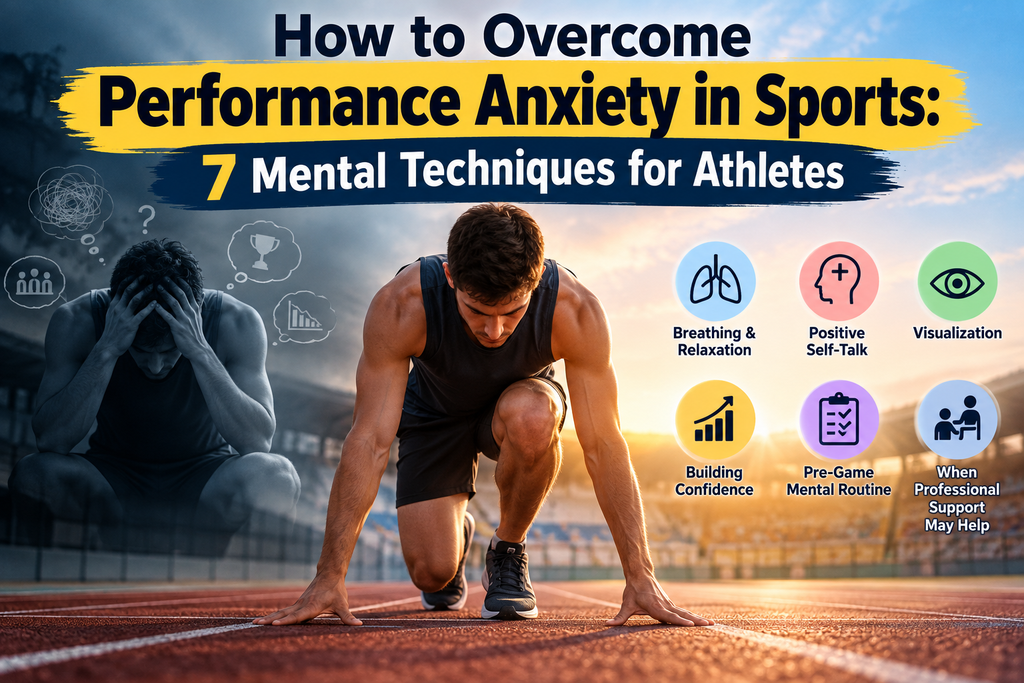
HOW TO OVERCOME PERFORMANCE ANXIETY Has this ever happened that u performed perfectly in practice but u always get nervous , distracted and felt less confidence during matches or special on important matches ? you are not alone. players at every level -from beginners to elite level competitors can experience this type of pressure and feel distracted this is common even during matches a racing heartbeat , negative thoughts and fear of making mistakes This is often known as performance anxiety in sports. some nervousness before competition is normal . in fact, a certain level of excitement and nervousness can help athletes feel alert and ready . problem starts when nervousness happens on huge level and that interferes with concentration, decision-making , confidence or physical performance sport psychology focuses on developing mental skill that helps athletes handle these situation more effectively . techniques such as meditation, breathing exercises, relaxation and positive self-talk and even a proper structured rotinue also help athletes to manage pressure and it also helps to maintain focus . In this blog, we will discuss 7 powerful mental techniques for athletes to overcome sports performance anxiety and build a stronger mindset. WHAT IS PERFORMANCE ANXIETY IN SPORTS ? Performance anxiety is the fear and nervousness which normally happens because of the fear of not performing well mostly it happens :- lets understand it with an example :- a football player can score easily during practice but then get nervous or feel demotivated while taking a plenty kick in final match The athlete may start thinking :- Instead of focusing on actions , the player start focusing on possible outcomes Performance anxiety does not mean an athlete is weak or unprepared. Many skilled athletes experience pressure. The goal is not to remove nervousness completely but to learn how to control it and use it positively. WHY DO ATHLETES FEEL NERVOUS BEFORE COMPETITION ? Now, lets talk about the nervousness which is athletes feel before the competition .there are several reasons why athletes experience this :- 1. Fear of failure its literally very common in most of the athletes even which are beginners and even who is still struggling for there better futures . there are many common thoughts like :- these thoughts can increase pressure 2. High expectations pressure can come from High expectations can create motivation , but unrealistic pressure can create anxiety . 3. Lack of Confidence When athletes doubt their abilities, they may focus more on mistakes rather than their strengths. Building athlete confidence is an important part of sports psychology. 4. Fear of Judgment Athletes may worry about what others will think if they perform badly. This can shift their attention away from the game and towards outside opinions. Common Signs of Sports Performance Anxiety Performance anxiety can affect the body, mind, and emotions. Physical Signs: Mental Signs: Emotional Signs: Recognizing these signs early helps athletes apply mental techniques before anxiety becomes difficult to control. 7 MENTAL TECHNEQUIES TO OVERCOME PERFORMANCE ANXIETY 1. Practice Breathing and Relaxation Breathing exercises are one of the simplest ways to calm the mind during stressful situations. When athletes feel anxious, their breathing often becomes faster. Slow and controlled breathing helps the body relax and improves focus. Try this: A calm body helps create a calm mind. 2. Use Positive Self-Talk The thoughts athletes have before and during competition can strongly affect performance. Negative self-talk: “I will lose.” “I cannot handle pressure.” Positive self-talk: “I am prepared.” “I will focus on the next action.” “I trust my training.” Positive self-talk for athletes helps improve confidence and keeps attention focused on performance. 3. Visualization Techniques for Athletes Visualization means mentally imagining successful performance before the actual competition. Athletes can imagine: Examples: A basketball player visualizes making a free throw. A runner imagines a strong finish. Visualization helps athletes prepare mentally and improve confidence. 4. Build Mental Toughness Mental toughness is the ability to stay focused and confident during challenging situations. Athletes can develop mental toughness by: A mentally strong athlete does not avoid challenges; they learn how to handle them. 5. Focus on Process, Not Results Many athletes become anxious because they only focus on winning. Instead of thinking: “I must win this match.” Focus on: Process goals reduce pressure and help athletes stay present. 6. Create a Pre-Game Mental Routine A pre-game mental routine helps athletes feel prepared and confident. A simple routine can include: Before competition: Example: “Stay calm. Stay focused. Trust your preparation.” Having a routine gives the mind something positive to focus on. 7. Learn From Mistakes and Reset Quickly Mistakes are part of every sport. A common problem is that athletes continue thinking about one mistake after it happens. A better approach is: Accept → Learn → Reset → Focus For example: A footballer misses a shot. Instead of thinking:“I always fail.” Think:“That moment is over. Focus on the next opportunity.” Strong athletes recover quickly after mistakes. Conclusion Performance anxiety is a normal part of competitive sports. Feeling nervous does not mean an athlete is not talented or prepared. The difference between good athletes and great athletes is often how they manage pressure. By practicing breathing exercises, positive self-talk, visualization, mental toughness, and pre-game routines, athletes can improve their confidence and perform better under pressure. Remember: Your physical skills help you compete, but your mental skills help you perform when it matters most.

Scroll to Top