
INTRODUCTION
Social media is a great source for getting knowledge and learning about new things and in today generation social media effects differently on today’s generation . now lets talk about how social media effects on athletes mental health .
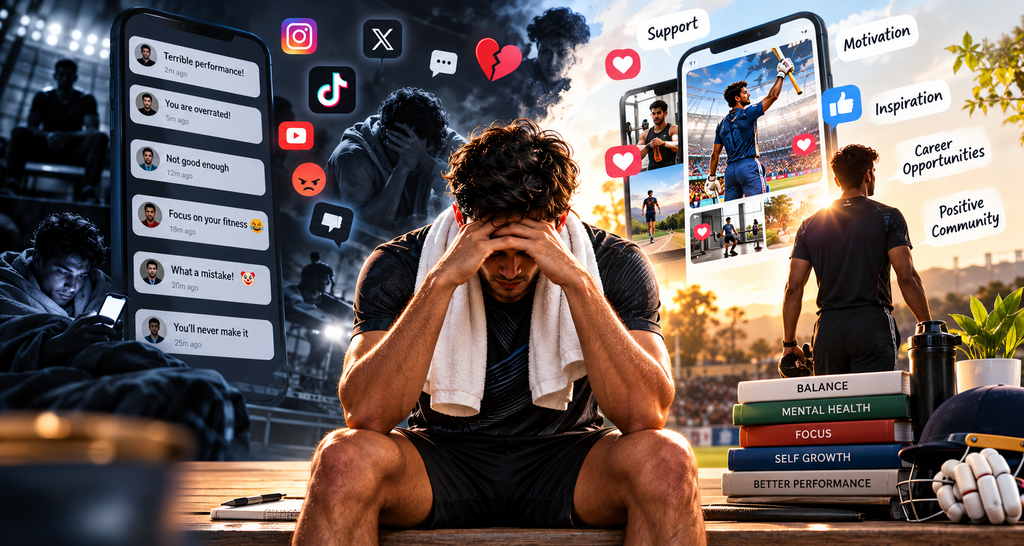
social media has changed the way athletes train, talk, communicate, compete and connect with fans. instagram, you tube, tiktok and other platforms allow athletes to share there achievements, build personal brand, and connect with supporters .
but, there is also a another side of digital world.
For athletes, social media also bring pressure, criticism, comparision, body-image concerns, online abuse and constant pressure to stay visible. when an athletes performance discussed publicly, a thousand of comments, reactions, hates and people opinions.
this is the main reason why that question raised that .
How does social media affects athletes mental health ?
The answer is not simply “social media is bad.” Research suggests that its effects are more complicated. A 2026 systematic review of athlete-focused studies found frequent associations between social media use and anxiety, depressive symptoms, emotional distress, body-image concerns, and burnout. However, the researchers also emphasized that findings vary according to how social media is used, the athlete population, and the context.
For athlete, the goal should be use social media healthy and internationally rather, then just avoiding it completely.
1. SOCIAL MEDIA CREATES PERFORMANCE PRESSURE
Athletes already face pressure to perform.
social media is just a another layer on it .
like, after a match player see his social media immediately and can check comments about :-
- Their performance
- Their mistakes
- Their fitness
- Their selection
- Their decisions
- Their appearance
A footballer who misses a penalty may continue thinking about the mistake after the match because the incident is being discussed online.
This can make it harder to mentally switch off from competition.
The 2026 IOC consensus statement identifies social media as an environmental factor relevant to elite athlete mental health and notes associations with poorer mental health, anxiety, sleep quality, and body-image concerns in athlete populations.
Sports Psychology Lesson is :-
Athletes need to separate performance feedback from personal identity.
One poor performance is an event—not a definition of who they are.
2. SOCIAL COMPARISION CAN AFFECT ATHLETES CONFIDINCE
Social media constantly shows people at their best
Athletes may see:
- Another athlete winning trophies
- Perfect training sessions
- Strong physiques
- New contracts
- Expensive lifestyles
- Celebrations and achievements
Comparing your everyday reality with someone else carefully selected highlights can create unrealistic expectations .
an athletes may start thinking that
Maybe i’m not enough ?
or
why am i not performing like them ?
This can gradually affect athlete confidence and self-esteem.
Sports psychology encourages athletes to focus more on personal progress than constant comparison.
Instead of asking:
“Am I better than them?”
ask:
“Am I improving compared with yesterday?”
3. BODY IMAGE AND APPEARANCE PRESSURE
Athletes often depend on their bodies for performance, but social media can change the way they view their appearance.
Images of highly muscular, lean, or “perfect” bodies can create unrealistic expectations.
An athlete may start focusing more on appearance than performance.
This can be particularly difficult when comments about body shape, weight, or appearance become frequent.
Important Reminder
A strong athletic body does not have to look a particular way.
Different sports require different physical characteristics, and individual athletes naturally have different body types.
4. ONLINE CRITICISM AND CYBER BULLYING
One of the biggest challenges for professional and elite athletes is online abuse.
Athletes can receive negative comments from strangers immediately after a competition.
This may include:
- Personal insults
- Threats
- Abuse about performance
- Appearance-based criticism
- Sexist comments
- Racist abuse
- Cyberbullying
The IOC consensus reports that athletes have been targeted by cyberbullying and other online abuse, with some research documenting substantial abusive content directed toward elite athletes.
Constant exposure to this negativity can increase emotional stress and make athletes feel that they are being judged all the time.
Sports Psychology Approach
Athletes can benefit from:
Boundaries → Blocking → Reporting → Support
Not every comment deserves an emotional response.
5. SOCIAL MEDIA CAN AFFECT SLEEP AND RECOVERY
Recovery is a major part of athletic performance.
An athletes needs physical recovery, but mental recovery is also important .
Constant checking of notifications, comments, messages, and sports updates can make it difficult to disconnect.
Research in athletes has found associations between social media use and reduced sleep quality, while broader research also links problematic social media use with sleep problems and poorer wellbeing.
Poor sleep can then make it harder to:
- Concentrate
- Recover
- Regulate emotions
- Train effectively
- Make good decisions
For this reason, athletes should consider creating screen-free periods, especially around bedtime.
THERE ARE ALSO A POSITIVE SIDE OF SOCIAL MEDIA LIKE :-
6. Social Media Can Also Help Athletes
It is important not to look only at the negative side.
Social media can provide real benefits.
Athletes can use it to:
- Connect with fans
- Communicate with family and friends
- Build professional opportunities
- Find sponsorships
- Share achievements
- Inspire younger athletes
- Find supportive communities
- Talk openly about mental health
The IOC notes that social media can provide connection, emotional support, communication, and sponsorship opportunities. It can also help some athletes challenge negative stereotypes and reduce feelings of isolation.
So the question isn’t:
“Should athletes use social media?”
A better question is:
“How can athletes use social media in a healthy way?”
Social Media and Sports Psychology: Finding the Balance
The relationship between social media and athletes is not completely negative or positive.
It depends on:
What you consume + How often you use it + How you respond to it.
An athlete who uses social media to connect with supporters and build a career may have a very different experience from an athlete who spends hours comparing themselves with others or reading negative comments.
Current research also cautions against assuming that social media itself directly causes every mental-health problem. Much of the athlete-specific evidence is observational or cross-sectional, meaning researchers can identify associations but cannot always establish cause and effect.
That distinction matters.
Final Thoughts
Social media is now part of the modern sporting environment.
It can give athletes a voice, create opportunities, build communities, and help them connect with fans. But it can also create social media pressure, comparison, online criticism, body-image concerns, sleep problems, and emotional stress.
The answer isn’t necessarily to disappear from social media.
The goal is to use it intentionally.
Athletes should remember that their worth is bigger than their follower count, likes, comments, or one competition result.
Your performance is something you do. It is not who you are.
Protect your attention.
Protect your recovery.
Protect your confidence.
And most importantly, remember: