
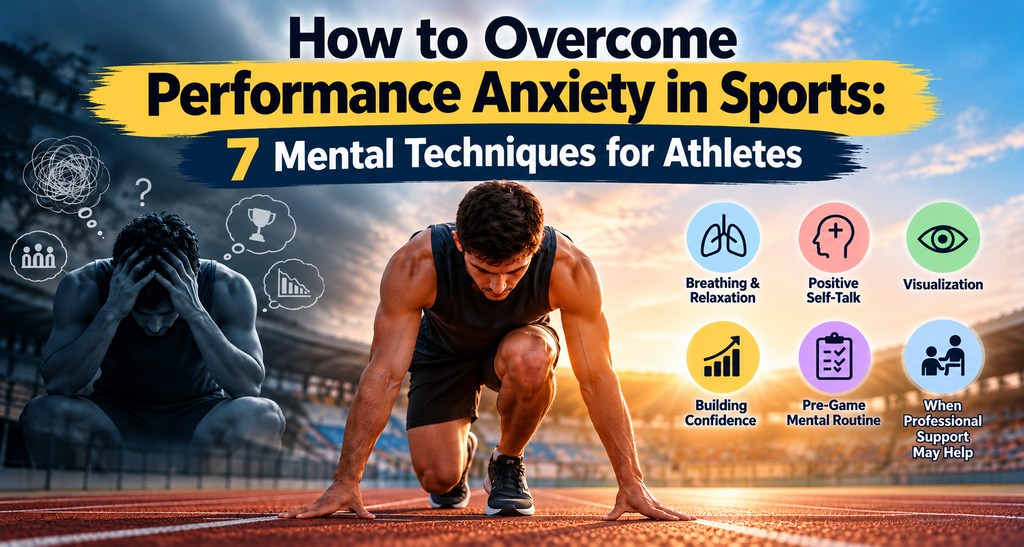
HOW TO OVERCOME PERFORMANCE ANXIETY
Has this ever happened that u performed perfectly in practice but u always get nervous , distracted and felt less confidence during matches or special on important matches ?
you are not alone.
players at every level -from beginners to elite level competitors can experience this type of pressure and feel distracted this is common even during matches a racing heartbeat , negative thoughts and fear of making mistakes
This is often known as performance anxiety in sports.
some nervousness before competition is normal . in fact, a certain level of excitement and nervousness can help athletes feel alert and ready . problem starts when nervousness happens on huge level and that interferes with concentration, decision-making , confidence or physical performance
sport psychology focuses on developing mental skill that helps athletes handle these situation more effectively . techniques such as meditation, breathing exercises, relaxation and positive self-talk and even a proper structured rotinue also help athletes to manage pressure and it also helps to maintain focus .
In this blog, we will discuss 7 powerful mental techniques for athletes to overcome sports performance anxiety and build a stronger mindset.
WHAT IS PERFORMANCE ANXIETY IN SPORTS ?
Performance anxiety is the fear and nervousness which normally happens because of the fear of not performing well
mostly it happens :-
- Before an important match
- During the tournament
- While competing against the strong team
- sometimes during the critical situations
lets understand it with an example :-
a football player can score easily during practice but then get nervous or feel demotivated while taking a plenty kick in final match
The athlete may start thinking :-
- what if i miss ?
- what will my coach think ?
- what if my team lose because of me ?
Instead of focusing on actions , the player start focusing on possible outcomes
Performance anxiety does not mean an athlete is weak or unprepared. Many skilled athletes experience pressure. The goal is not to remove nervousness completely but to learn how to control it and use it positively.
WHY DO ATHLETES FEEL NERVOUS BEFORE COMPETITION ?
Now, lets talk about the nervousness which is athletes feel before the competition .there are several reasons why athletes experience this :-
1. Fear of failure
its literally very common in most of the athletes even which are beginners and even who is still struggling for there better futures .
there are many common thoughts like :-
- ”i can’t win”.
- “everyone except me is winning”.
- “one mistake will ruin everything “.
these thoughts can increase pressure
2. High expectations
pressure can come from
- Coaches
- Fans
- Teammates
- Family
- Personal goals
High expectations can create motivation , but unrealistic pressure can create anxiety .
3. Lack of Confidence
When athletes doubt their abilities, they may focus more on mistakes rather than their strengths.
Building athlete confidence is an important part of sports psychology.
4. Fear of Judgment
Athletes may worry about what others will think if they perform badly.
This can shift their attention away from the game and towards outside opinions.
Common Signs of Sports Performance Anxiety
Performance anxiety can affect the body, mind, and emotions.
Physical Signs:
- Fast heartbeat
- Sweating
- Muscle tension
Mental Signs:
- Overthinking
- Negative thought
- Fear of failure
Emotional Signs:
- Nervousness
- Frustration
- Low confidence
Recognizing these signs early helps athletes apply mental techniques before anxiety becomes difficult to control.
7 MENTAL TECHNEQUIES TO OVERCOME PERFORMANCE ANXIETY
1. Practice Breathing and Relaxation
Breathing exercises are one of the simplest ways to calm the mind during stressful situations.
When athletes feel anxious, their breathing often becomes faster. Slow and controlled breathing helps the body relax and improves focus.
Try this:
- Take a slow breath in
- Hold for a few seconds
- Slowly breathe out
- Repeat several times
A calm body helps create a calm mind.
2. Use Positive Self-Talk
The thoughts athletes have before and during competition can strongly affect performance.
Negative self-talk:
“I will lose.”
“I cannot handle pressure.”
Positive self-talk:
“I am prepared.”
“I will focus on the next action.”
“I trust my training.”
Positive self-talk for athletes helps improve confidence and keeps attention focused on performance.
3. Visualization Techniques for Athletes
Visualization means mentally imagining successful performance before the actual competition.
Athletes can imagine:
- Performing skills correctly
- Staying calm under pressure
- Handling difficult situations
- Achieving their goals
Examples:
A basketball player visualizes making a free throw.
A runner imagines a strong finish.
Visualization helps athletes prepare mentally and improve confidence.
4. Build Mental Toughness
Mental toughness is the ability to stay focused and confident during challenging situations.
Athletes can develop mental toughness by:
- Accepting mistakes
- Staying focused on goals
- Learning from mistakes
- Remaining positive under pressure
A mentally strong athlete does not avoid challenges; they learn how to handle them.
5. Focus on Process, Not Results
Many athletes become anxious because they only focus on winning.
Instead of thinking:
“I must win this match.”
Focus on:
- Giving your best effort
- Following your strategy
- Staying focused
- Performing one action at a time
Process goals reduce pressure and help athletes stay present.
6. Create a Pre-Game Mental Routine
A pre-game mental routine helps athletes feel prepared and confident.
A simple routine can include:
Before competition:
- Deep breathing
- Positive affirmations
- Visualization
- Reviewing goals
Example:
“Stay calm. Stay focused. Trust your preparation.”
Having a routine gives the mind something positive to focus on.
7. Learn From Mistakes and Reset Quickly
Mistakes are part of every sport.
A common problem is that athletes continue thinking about one mistake after it happens.
A better approach is:
Accept → Learn → Reset → Focus
For example:
A footballer misses a shot.
Instead of thinking:
“I always fail.”
Think:
“That moment is over. Focus on the next opportunity.”
Strong athletes recover quickly after mistakes.
Conclusion
Performance anxiety is a normal part of competitive sports. Feeling nervous does not mean an athlete is not talented or prepared.
The difference between good athletes and great athletes is often how they manage pressure.
By practicing breathing exercises, positive self-talk, visualization, mental toughness, and pre-game routines, athletes can improve their confidence and perform better under pressure.
Remember:
Your physical skills help you compete, but your mental skills help you perform when it matters most.